What this is
In brief
Origins
The Rohirrim were the Éothéod, a people of the northern vales who came south and were granted the land of Calenardhon by the Steward Cirion of Gondor in T.A. 2510 as reward for their aid at the Field of Celebrant. They named the land the Riddermark and themselves the Eorlingas after Eorl the Young.
Culture
A pastoral, martial and open-handed society centred on horses, mead-halls and the bonds of oath and kin. Their kings ride at the head of their riders, their songs are of valour and mourning, and hospitality to strangers is a sacred duty.
Language
The Rohirric tongue, related to the northern speech of the Éothéod, with Westron for dealings abroad.
History
From Eorl the Young to Helm Hammerhand and Theoden, the Rohirrim defended their plains against Dunlendings, Orcs and Saruman. In the War of the Ring they rode to the rescue at Helm’s Deep and then, led by Theoden, broke the siege of Minas Tirith on the Pelennor Fields, where the king fell. Éomer became king and renewed their oath to the Reunited Kingdom.
Leaders
Settlements
- edoras
- helms-deep
- aldeburg
- dunharrow
Alliances
- gondor
- the-fellowship-of-the-ring
- ents
Conflicts
- battle-of-helms-deep
- battle-of-the-pelennor-fields
- war-of-the-ring
Notable members
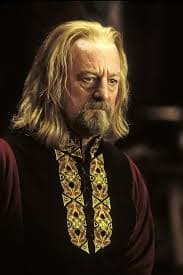 Character
Théoden
King of Rohan, aged prematurely by Gríma’s counsel, later restored and killed at the Pelennor Fields.
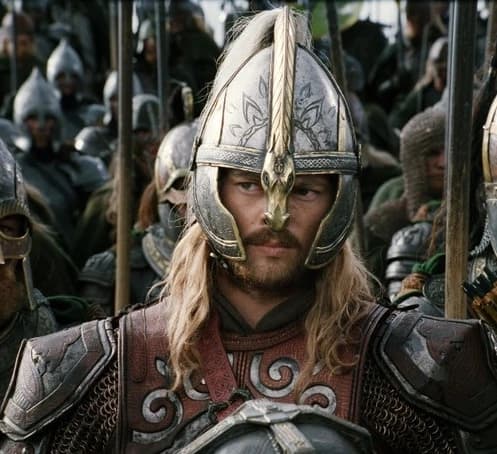 Character
Éomer
Théoden’s nephew, a marshal of Rohan who becomes king after the war.
Éowyn
Théoden’s niece, who defied the prohibition on women going to war and slew the Witch-king at the Pelennor.
Sources
The Lord of the Rings · 1954–55
Three volumes: The Fellowship of the Ring, The Two Towers, The Return of the King.
Unfinished Tales · 1980
Expanded and alternative accounts of the First, Second and Third Ages.
The Silmarillion · 1977
Posthumously edited. Contains the Ainulindalë, Valaquenta, Quenta Silmarillion, Akallabêth and Of the Rings of Power.
Related entries
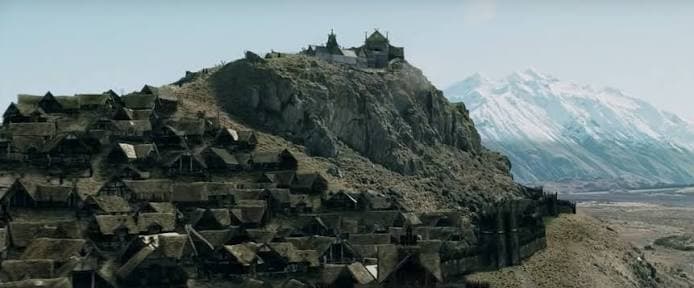 Location
Rohan
The horse-lords’ kingdom north of the White Mountains, granted to the Éothéod for service to Gondor.
 People
Muster of Rohan
The host that Rohan raised at Dunharrow in the War of the Ring, which rode to the relief of Gondor and broke the siege of Minas Tirith.
 People
Men
The Secondborn Children of Ilúvatar, mortal and brief-lived, whose kingdoms and choices dominate the later ages of Middle-earth.
Gondor
The great southern kingdom of the Dúnedain, long defended by its Stewards and finally restored under King Elessar.