Description
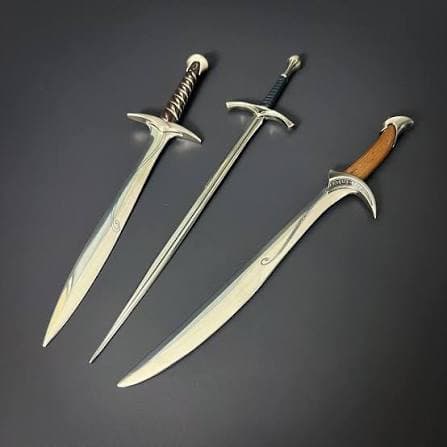
These three swords were made in the hidden city of Gondolin and bear marks of that craft: long straight Elven blades, well wrought, and named. They were lost for ages until Thorin company found them in a trolls cave on the road east. Orcrist, the Goblin-cleaver, and Glamdring, the Foe-hammer, were blades the orcs of the Misty Mountains still dreaded by name; Sting, small enough for a hobbit, proved over time to be one of the sharpest edges in the legendarium. All three are weapons, but the narrative treats them almost as characters, carrying the memory of lost Gondolin into Bilbo and Frodo story.
Powers
- Excellent Elven blades, keen and enduring, that strike fear into orcs and goblins.
- Sting and the goblin-swords are described as glowing when enemies are near.
- Their names and lineage carry weight even among the enemies who remember Gondolin.
Limitations
- They are simply very good swords; they hold no curse and no special magic beyond their quality and their glow.
- Their long concealment means much of their First Age history is unknown.
Line of owners
- 1
The smiths and defenders of Gondolin
First Age
Forged and borne before the fall of the hidden city.
- 2
Thorin and company
T.A. 2941
Found in a troll-hoard on the journey to Erebor; Orcrist goes to Thorin, Glamdring to Gandalf, Sting to Bilbo.
- 3
Thorin tomb and Gandalf and Bilbo
T.A. 2941 onward
Orcrist is laid on Thorin tomb; Glamdring stays with Gandalf; Sting passes to Bilbo and later to Frodo.
- 4
Frodo, then Samwise
T.A. 3018-3019
Sting is worn through the quest to destroy the Ring and later kept by Sam.
Symbolism
Symbolism
The survival of the Elder Days in small things: old light and old craftsmanship resurfacing to serve unlikely hands. Sting in particular turns a Hobbit reluctance into genuine courage.
Fate
Orcrist remains on Thorin tomb in Erebor. Sting remains in Middle-earth, kept by the hobbits who bore it. Glamdring goes with Gandalf over the Sea at the end of the Third Age.
Characters
In the histories
Sources
The Hobbit · 1937
Published in Tolkien’s lifetime. The primary narrative of Bilbo’s journey.
The Lord of the Rings · 1954–55
Three volumes: The Fellowship of the Ring, The Two Towers, The Return of the King.
The Silmarillion · 1977
Posthumously edited. Contains the Ainulindalë, Valaquenta, Quenta Silmarillion, Akallabêth and Of the Rings of Power.
Unfinished Tales · 1980
Expanded and alternative accounts of the First, Second and Third Ages.
The History of Middle-earth · 1983–96
Twelve volumes documenting the evolution of the legendarium.
Related entries
 Artifact
The One Ring
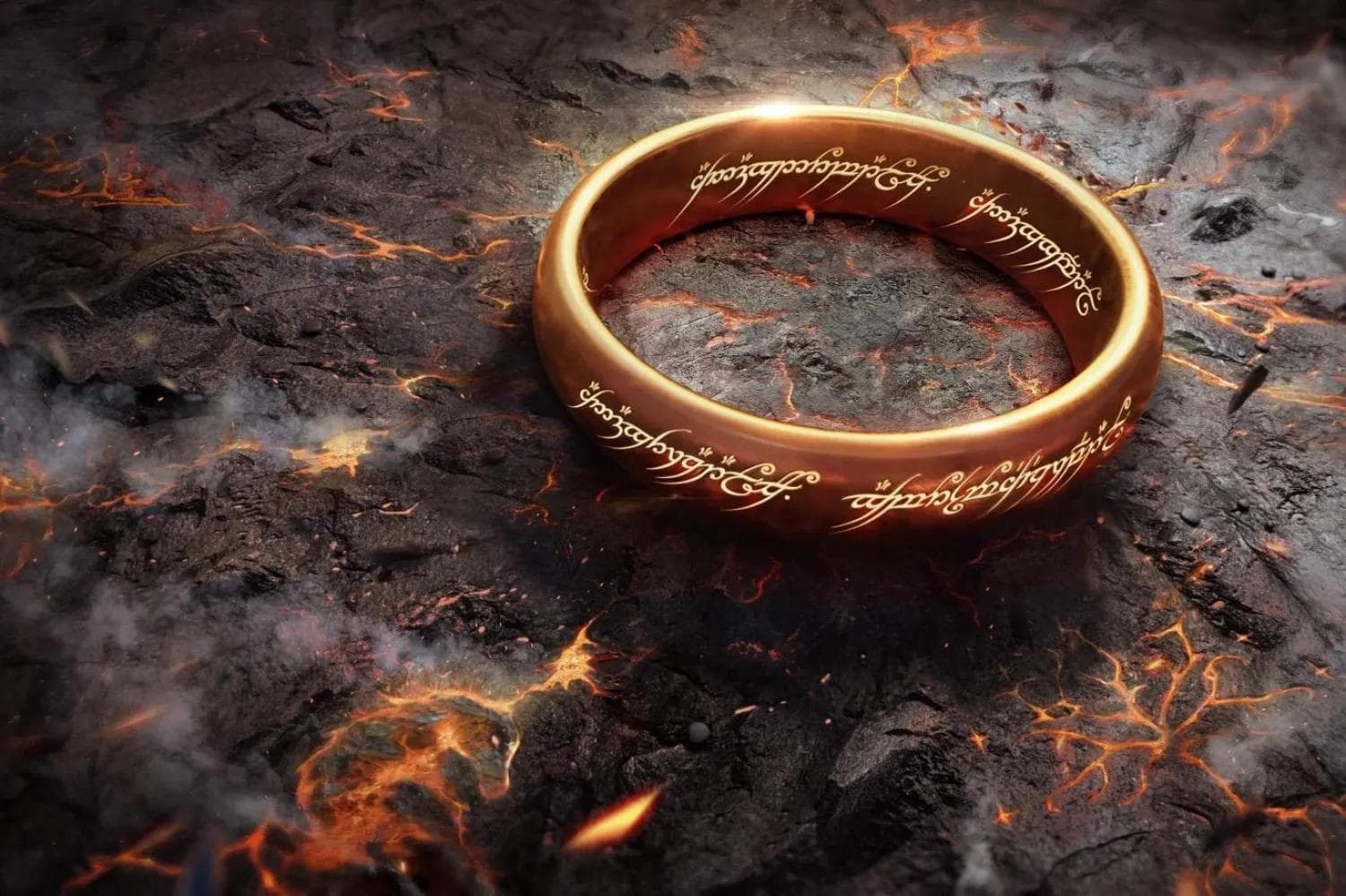
Sauron's master-ring, forged in secret to dominate the other Rings of Power and their bearers. Its passage through Middle-earth drives the central drama of The Lord of the Rings.
 Artifact
The Arkenstone
A great jewel of Erebor, prized above all treasure by the Dwarves and used by Bilbo in a desperate attempt to prevent war. Its beauty brings out the dragon-sickness in Thorin.