Spoiler-ish care
Description
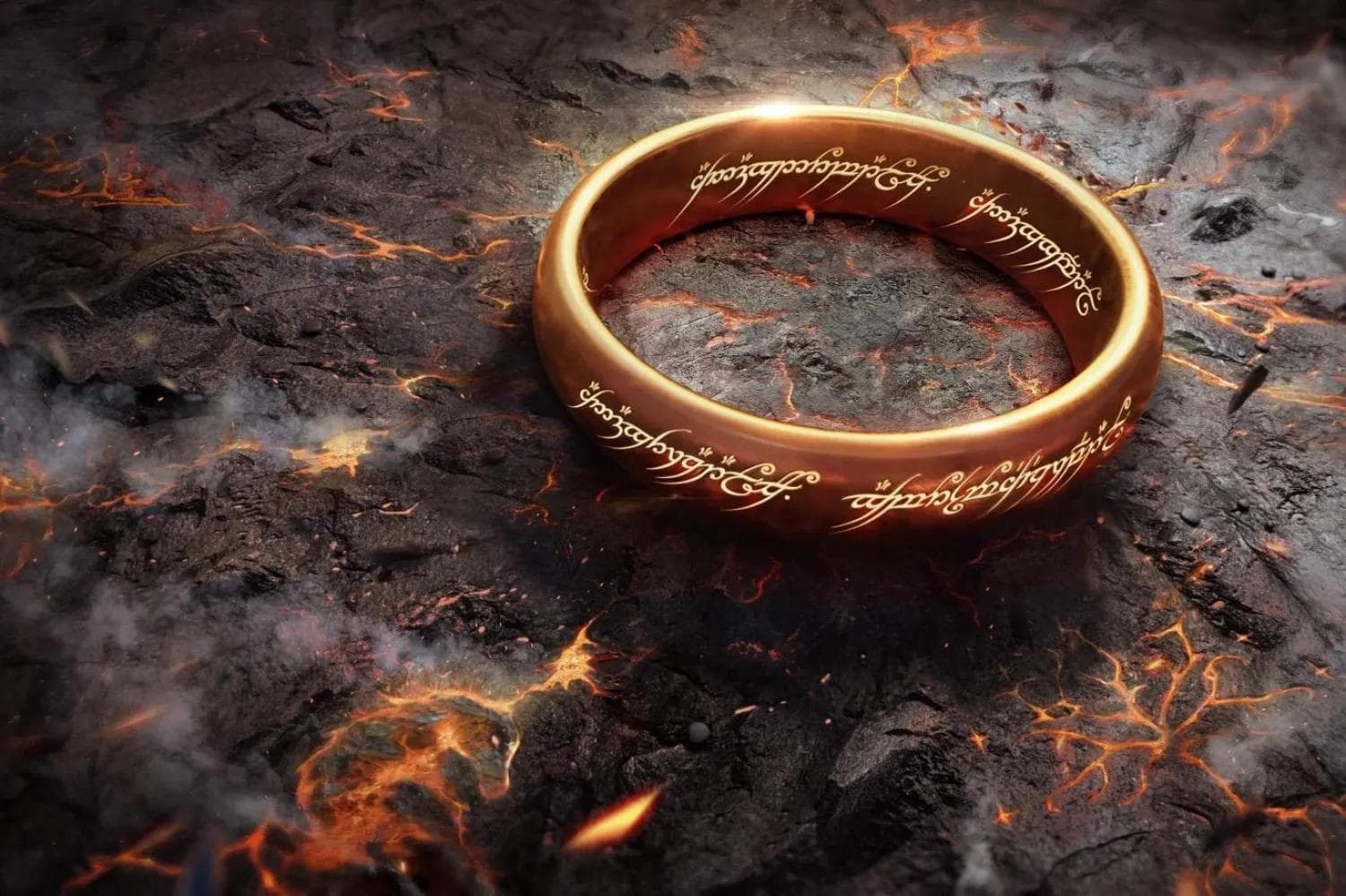
A plain gold ring that is far more than it appears. Sauron made it as an instrument of control, binding into it a great part of his own native strength so that it could master the other Rings and the wills of those who wore them. Because so much of himself passed into the metal, the Ring and its maker are joined: while it endures he endures, and where it is he seeks to be. To most eyes it is a trifle, easily overlooked, which is part of why it survives so many hands and so many centuries.
Powers
- Makes a mortal wearer invisible, drawing them partly into the wraith-world.
- Unnaturally prolongs the life of a mortal holder, though not their contentment.
- Offers domination over the other Rings of Power and the minds of those who bear them.
- Exerts a constant seductive pressure on its keeper, presenting itself as an opportunity rather than a danger.
- Endures and preserves its own existence, slipping from danger and slipping back to its maker when it can.
Limitations
- While Sauron lives the Ring cannot be unmade, except in the fires where it was forged.
- It cannot be used with safety by anyone weaker than Sauron; every attempt at mastery is a trap.
- It can dominate and preserve, but it cannot create or bestow true freedom.
- The texts leave its effect on Tom Bombadil unexplained; he alone is simply untouched by it.
Line of owners
- 1
Sauron
Second Age, c. S.A. 1600-3441
Wears it while forging the Rings of Power and throughout the war against the Elves.
- 2
Isildur
S.A. 3441 - T.A. 2
Cuts the Ring from Sauron hand at the close of the War of the Last Alliance, then keeps it as weregild.
- 3
The river Anduin
T.A. 2 - c. 2463
Lost when Isildur is ambushed at the Gladden Fields and the Ring slips from his hand into the water.
- 4
Deagol, then Smeagol (Gollum)
c. T.A. 2463-2941
Found in the Gladden; Smeagol murders Deagol for it and is slowly ruined by it.
- 5
Bilbo Baggins
T.A. 2941-3001
Found in the tunnels of the Misty Mountains and later gives it up of his own will, with difficulty.
- 6
Frodo Baggins
T.A. 3001-3019
Carries it toward Orodruin; Samwise and Gandalf each bear it briefly along the way.
- 7
Destroyed in Orodruin
25 March T.A. 3019
Gollum seizes it at the Fire and falls with it into the mountain.
Symbolism
Symbolism
The clearest image in the legendarium of the will to power and the corruption that domination brings. A small, beautiful, easily carried thing whose influence is wildly out of proportion to its size, it preys on the desire to set the world right by force.
Fate
Destroyed in the fires of Orodruin by accident and obsession rather than by the free choice of its bearer. With it Sauron is unmade and the Third Age ends.
Interpretation
Reasoned analysis — not from the books
Tolkien resisted reading the Ring as a simple political allegory; he spoke of it as a fable about the machine and the danger of seizing power for supposedly good ends. The book deliberately withholds a clean moral triumph at the Cracks of Doom: the Ring is destroyed against the hero will.
Characters
 Character
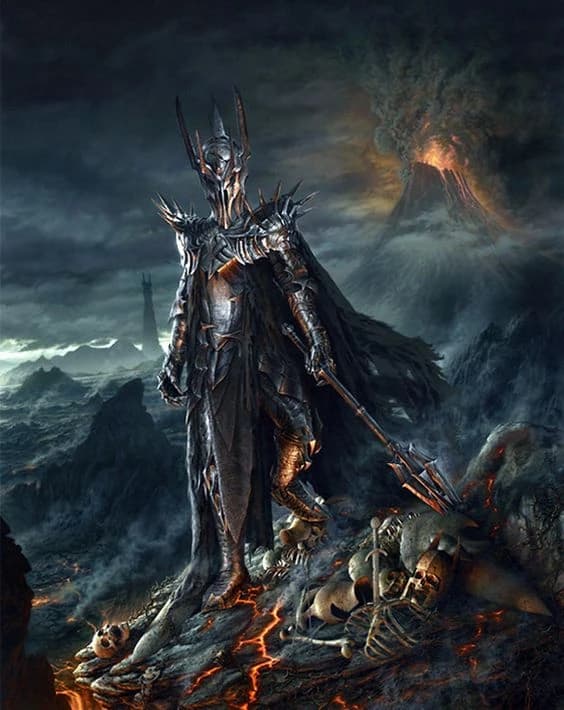
Sauron
A Maia and former lieutenant of Morgoth, forger of the One Ring and the central antagonist of The Lord of the Rings.
Isildur
King of Gondor and Arnor who cut the One Ring from Sauron’s hand, then kept it and was slain by Orcs.
 Character
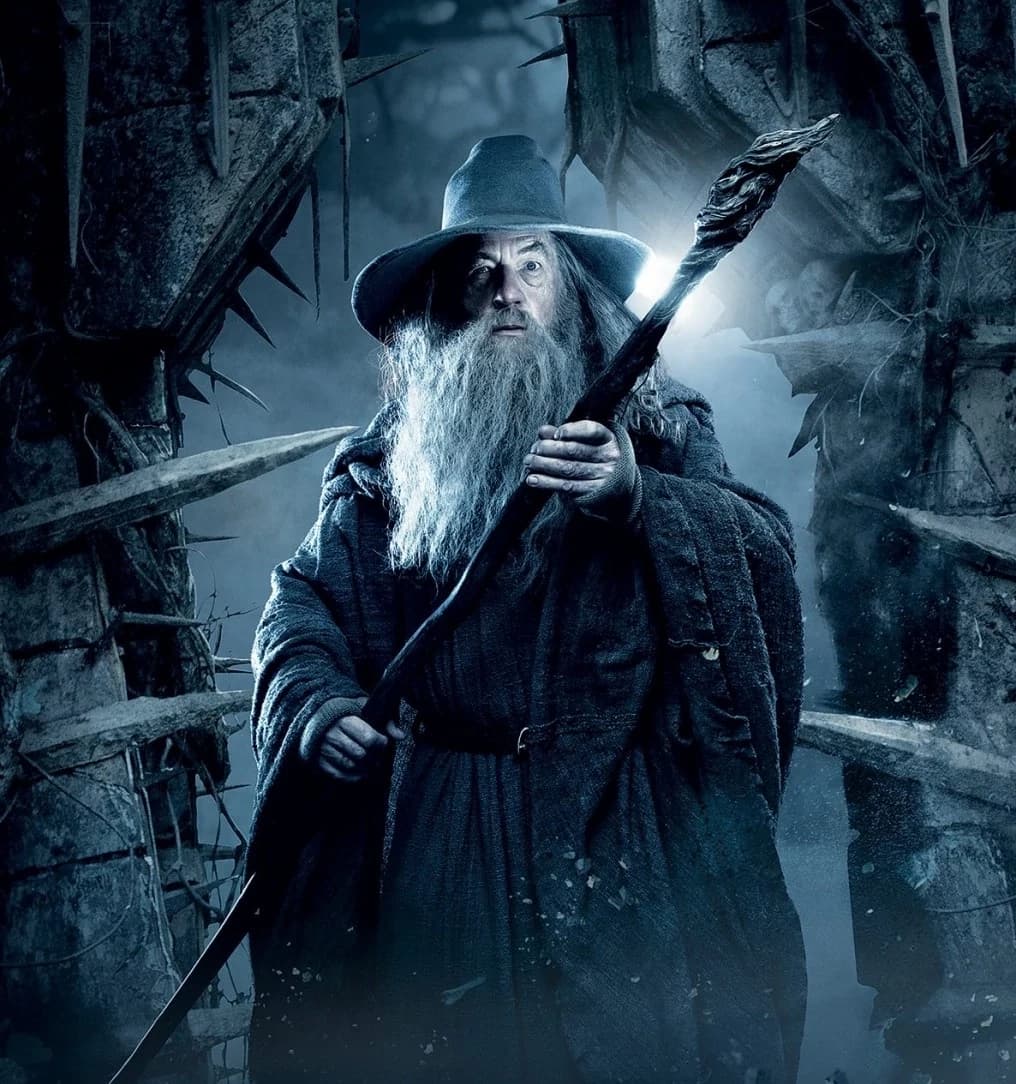
Gandalf
A Wizard of the Istari, keeper of the Elven-ring Narya, and the chief architect of the resistance to Sauron.
 Character
Galadriel
An Elven-queen of the Noldor, wielder of Nenya, and one of the wisest and most powerful figures remaining in Middle-earth.
In the histories
Sources
The Lord of the Rings · 1954–55
Three volumes: The Fellowship of the Ring, The Two Towers, The Return of the King.
The Hobbit · 1937
Published in Tolkien’s lifetime. The primary narrative of Bilbo’s journey.
The Silmarillion · 1977
Posthumously edited. Contains the Ainulindalë, Valaquenta, Quenta Silmarillion, Akallabêth and Of the Rings of Power.
Unfinished Tales · 1980
Expanded and alternative accounts of the First, Second and Third Ages.
The History of Middle-earth · 1983–96
Twelve volumes documenting the evolution of the legendarium.
The Letters of J.R.R. Tolkien · 1981
Authorial commentary useful for interpretation, but not always narrative canon.
Related entries
 Artifact
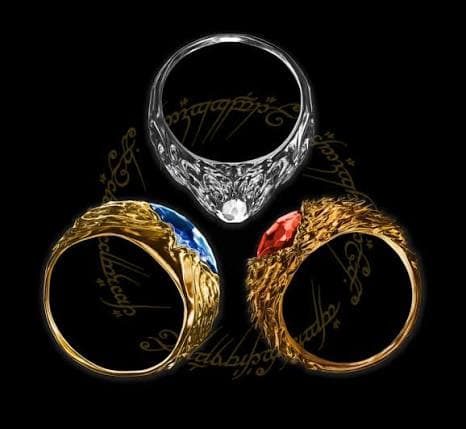
The Three Elven Rings
The three Rings of Power made by Celebrimbor alone, never touched by Sauron, and kept hidden while the One endured. Their preservation of all that Elves loved ended when the One was destroyed.
 Artifact
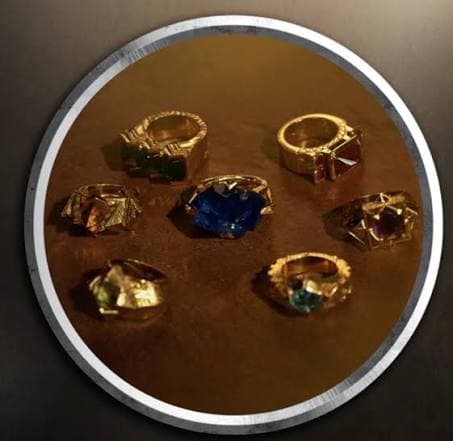
The Seven Dwarf Rings
Seven Rings given to the seven houses of the Dwarves. They bred wealth and gold-lust rather than the wraithdom Sauron intended, and most were consumed by dragons or reclaimed by their maker.
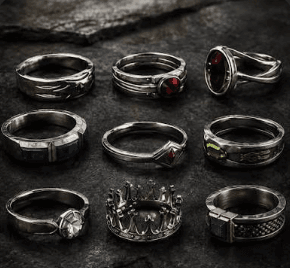 Artifact
The Nine Rings of Men
The nine Rings given to mortal lords, whose wearers were stretched into unending life and became the Ringwraiths, the Nazgul, Sauron most terrible servants.
 Artifact
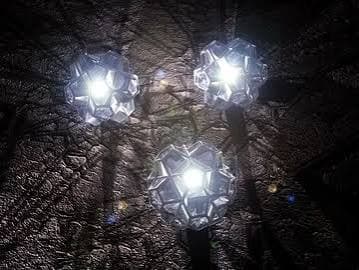
The Silmarils
Three unearthly jewels made by Feanor to hold the blended light of the Two Trees. Their theft by Morgoth and the oath sworn to recover them set the whole tragedy of the First Age in motion.