Description
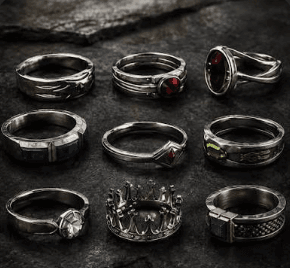
The Nine were the gifts Sauron used to recruit the most promising of mortal lords, kings and sorcerers of the Second Age. A ring of the Nine gave its bearer invisibility, long life and a vast increase of personal power, and for a time they seemed to be the lucky ones. But Sauron had made them as snares: the longer they were worn the more the wearers faded out of the visible world and into the wraith-world, until they were wholly subject to the One and to its master. Thus they became the Nazgul, neither living nor dead.
Powers
- Bestowed invisibility and entrance into the wraith-world on mortal wearers.
- Greatly prolonged life and multiplied whatever power the bearer already had.
- Enabled their bearers to see and to move partly outside the visible world.
Limitations
- They slowly stripped the wearer of body and of free will, turning them into wraiths.
- They made the wearer wholly subject to the One and to Sauron.
- Men, being mortal, could not bear them as the Dwarves bore the Seven.
Line of owners
- 1
Nine mortal lords and sorcerers
Second Age
Chosen and given the rings by Sauron; their names are mostly not preserved.
- 2
The Nazgul
Second Age through the Third Age
The wraiths, chief among them the Witch-king, serve Sauron as his most feared servants.
- 3
Sauron
Third Age
The rings are accounted to remain in Sauron keeping or with the wraiths; the texts do not state their final disposition plainly.
Symbolism
Symbolism
The bargain of borrowed power: the promise of mastery that delivers its holder into servitude. The Nine are the dark mirror of the Three, taking rather than preserving.
Fate
The rings remained bound to Sauron and his wraiths. When the One was destroyed the Nine lost their power and the Ringwraiths came to nothing; the surviving rings are not individually accounted for in the texts.
Interpretation
Reasoned analysis — not from the books
The accounts do not give the individual names of the Nine. Claims that a particular character can be matched to a particular ring rest on adaptation and conjecture, not on the published texts.
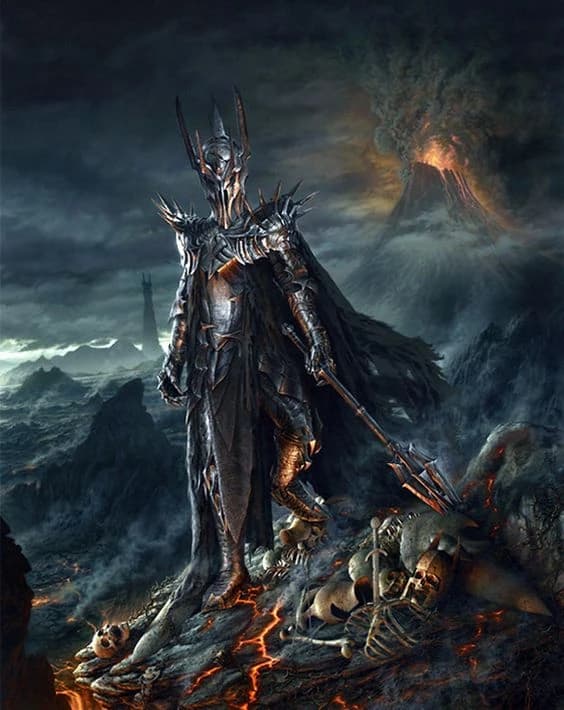
Characters
In the histories
Sources
The Lord of the Rings · 1954–55
Three volumes: The Fellowship of the Ring, The Two Towers, The Return of the King.
The Silmarillion · 1977
Posthumously edited. Contains the Ainulindalë, Valaquenta, Quenta Silmarillion, Akallabêth and Of the Rings of Power.
Unfinished Tales · 1980
Expanded and alternative accounts of the First, Second and Third Ages.
The Letters of J.R.R. Tolkien · 1981
Authorial commentary useful for interpretation, but not always narrative canon.
Related entries
 Artifact
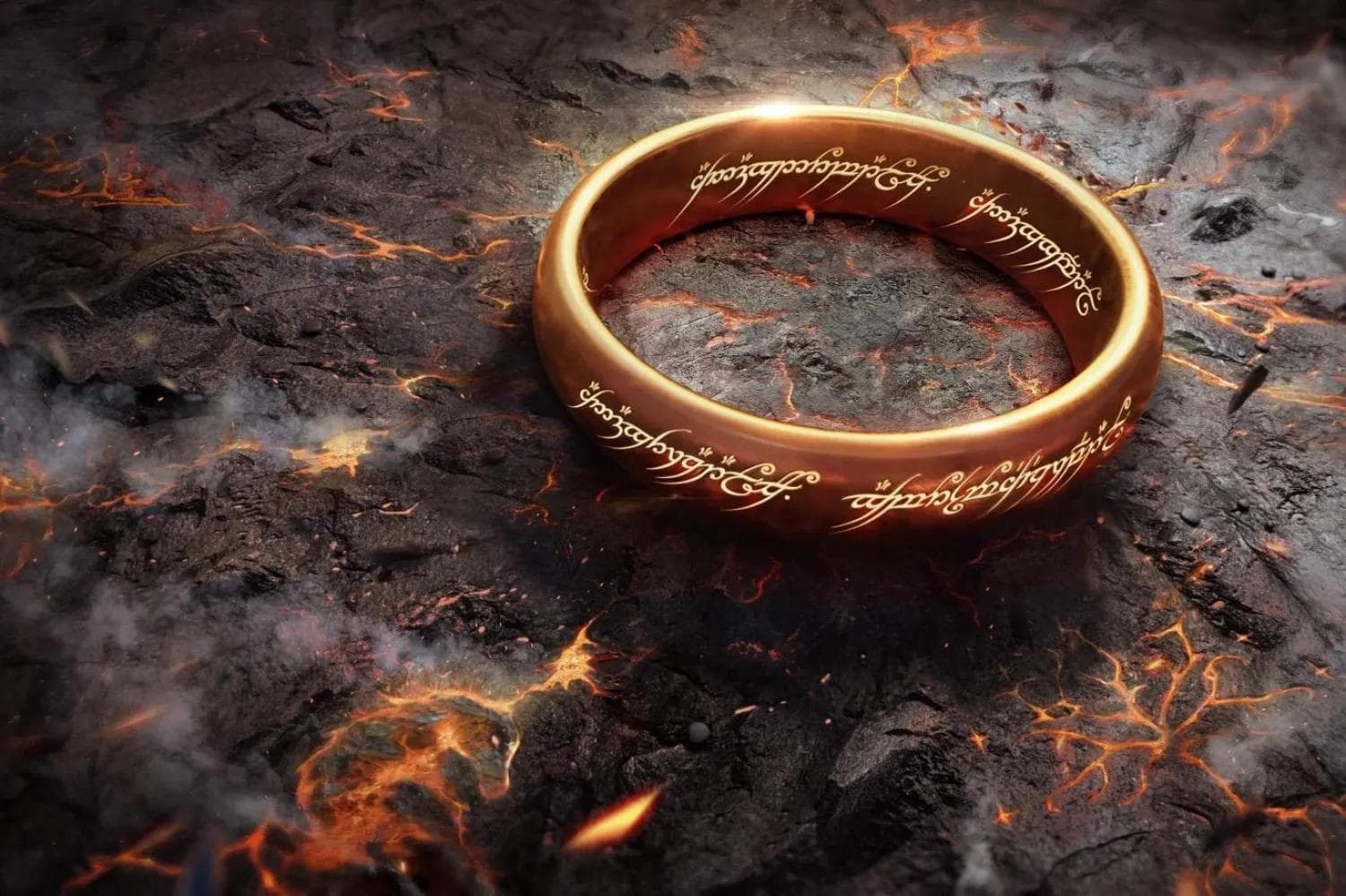
The One Ring
Sauron's master-ring, forged in secret to dominate the other Rings of Power and their bearers. Its passage through Middle-earth drives the central drama of The Lord of the Rings.
 Artifact
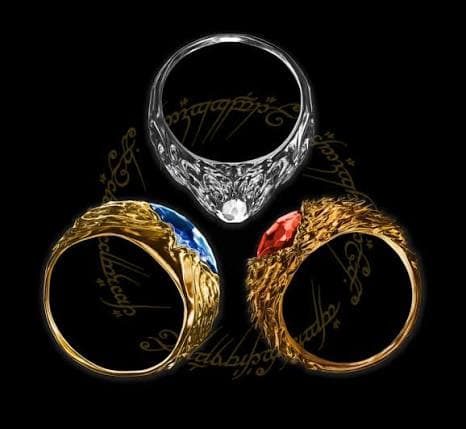
The Three Elven Rings
The three Rings of Power made by Celebrimbor alone, never touched by Sauron, and kept hidden while the One endured. Their preservation of all that Elves loved ended when the One was destroyed.
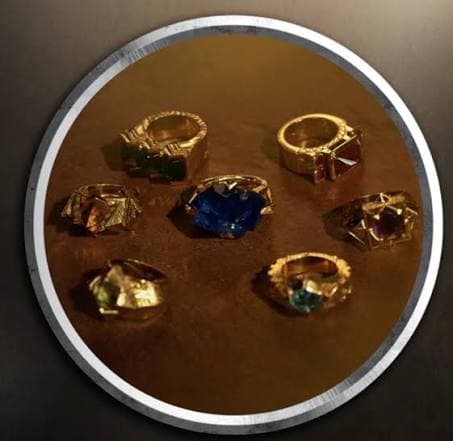 Artifact
The Seven Dwarf Rings
Seven Rings given to the seven houses of the Dwarves. They bred wealth and gold-lust rather than the wraithdom Sauron intended, and most were consumed by dragons or reclaimed by their maker.
The Morgul-blade
A cursed knife of Minas Morgul whose broken fragment works its way toward a victim heart, turning a wound into a slow fading toward the wraith-world.