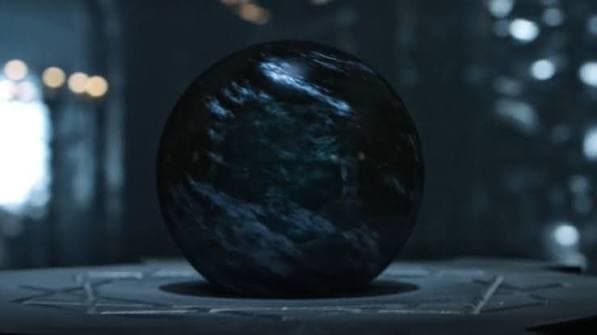
Description
The palantiri are spheres of dark crystal in which a person of sufficient will can see things far away and, with another stone, speak to a distant viewer. They were a gift of the Eldar to the Numenoreans and were divided between the kingdoms in exile: some kept in Gondor, some in Arnor, with the chief stone of the north in the Tower Hills. They are not magic mirrors of simple convenience. Their use demands strength of mind, the images are not always reliable, and a stone can be seized and turned by a stronger will on the other side, which is exactly what Sauron does with the stone of Minas Ithil.
Powers
- Allow a strong-willed user to see distant places and events.
- Allow two stones to communicate across great distances.
- Can reveal hidden things and far countries to a sufficiently powerful viewer.
Limitations
- Require strength of will; the untrained or the proud can be hurt or deceived by them.
- Can be dominated from the other end by a stronger will such as Sauron.
- Some stones are limited: the stone of the Tower Hills is said to look only westward toward Eressea, and one account describes a stone that shows little but hands.
Line of owners
- 1
Feanor and the Eldar
Elder Days
Originally made in Aman and later given to the Numenoreans.
- 2
Elendil and his sons
Second Age
Divided between the northern and southern kingdoms after the Downfall of Numenor.
- 3
The kingdoms of Gondor and Arnor
Second Age into the Third
Kept at Osgiliath, Minas Anor, Minas Ithil, Orthanc, Annuminas and the Tower Hills.
- 4
Saruman, then the Reunited Kingdom
Third Age into the Fourth
The Orthanc stone passes from Saruman to the hands of the rightful kings.
Symbolism
Symbolism
Knowledge as a temptation and a danger: the wish to see everything, and the ease with which foresight becomes manipulation.
Fate
Several were lost in the wars and misfortunes of the North-kingdom. The stone of Orthanc survives into the Fourth Age under the Reunited Kingdom. The Master-stone of the Tower Hills is said in later tradition to have gone back over the Sea.
Interpretation
Reasoned analysis — not from the books
The systematic rules of the palantiri come mostly from the essay on them in Unfinished Tales; the narrative books show their use and abuse without spelling out every limit.
Characters
Elendil
Survivor of Númenor and first High King of the Dúnedain in Middle-earth, who founded Gondor and Arnor.
 Character
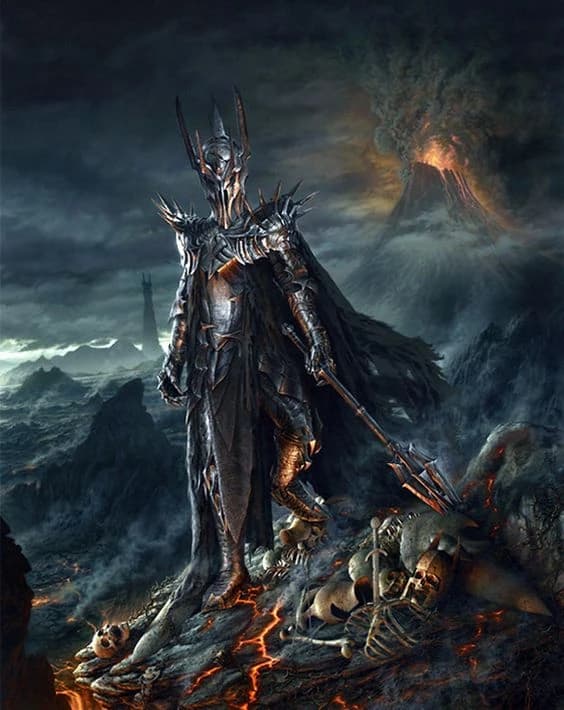
Sauron
A Maia and former lieutenant of Morgoth, forger of the One Ring and the central antagonist of The Lord of the Rings.
 Character
Saruman
The chief of the Wizards, whose study of Sauron’s power corrupted him into a would-be rival lord.
 Character
Denethor II
The proud Steward of Gondor, worn down by the palantír and despair, who perishes in madness.
 Character
Aragorn
The heir of Isildur, raised in Rivendell in secret, who becomes King Elessar and reunites the kingdoms of Gondor and Arnor.
In the histories
Sources
The Lord of the Rings · 1954–55
Three volumes: The Fellowship of the Ring, The Two Towers, The Return of the King.
Unfinished Tales · 1980
Expanded and alternative accounts of the First, Second and Third Ages.
The Silmarillion · 1977
Posthumously edited. Contains the Ainulindalë, Valaquenta, Quenta Silmarillion, Akallabêth and Of the Rings of Power.
The Letters of J.R.R. Tolkien · 1981
Authorial commentary useful for interpretation, but not always narrative canon.
Related entries
 Artifact
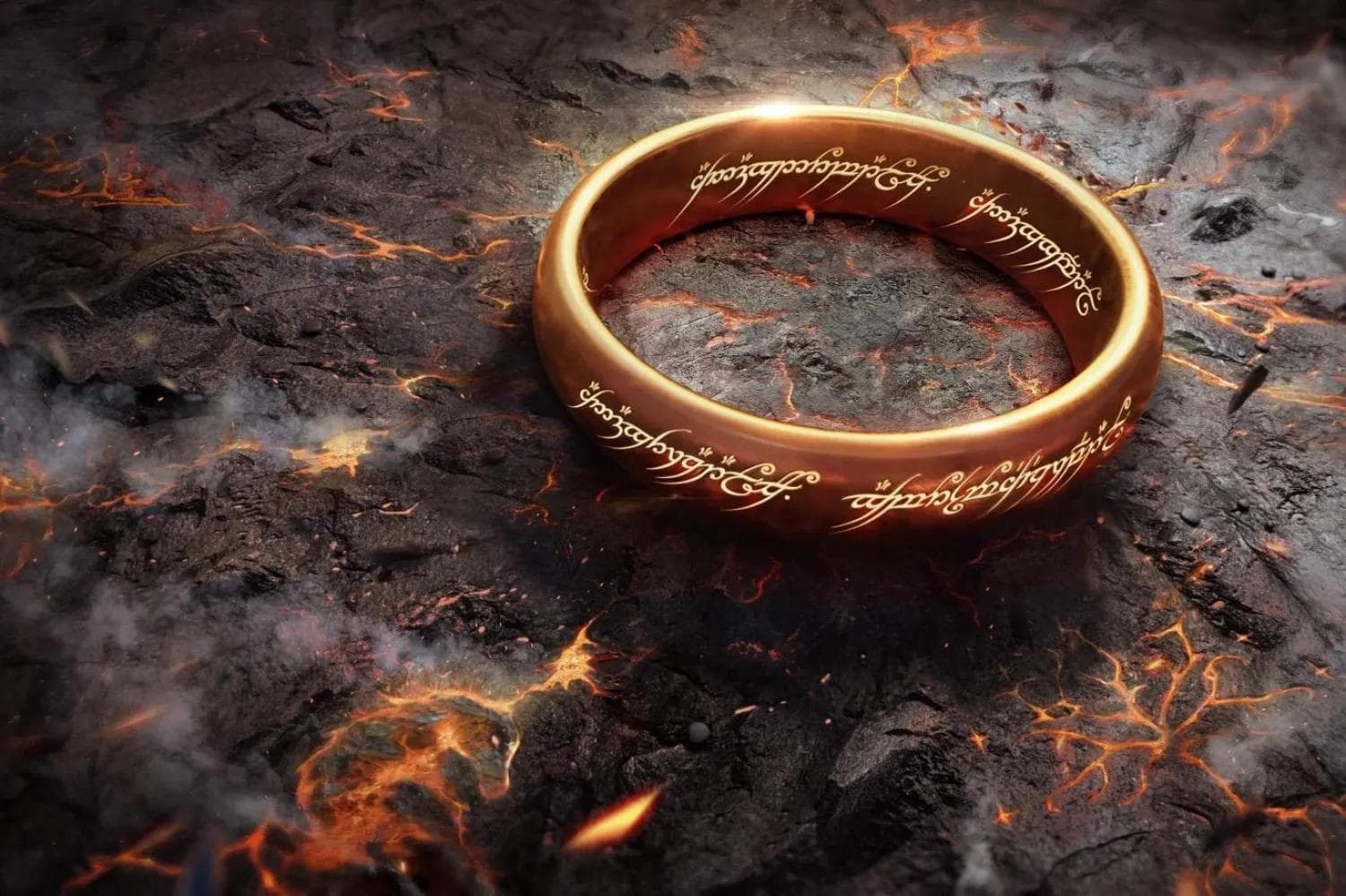
The One Ring
Sauron's master-ring, forged in secret to dominate the other Rings of Power and their bearers. Its passage through Middle-earth drives the central drama of The Lord of the Rings.
 Artifact
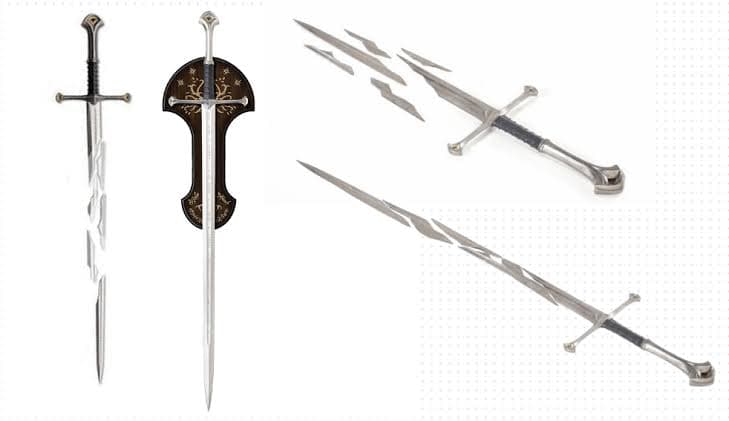
Narsil and Anduril
The sword of Elendil, broken when he fell before Sauron and reforged in Rivendell as Anduril, the Flame of the West, the blade that passes to the heir of Isildur.